After the Tailgate Drops: Holding Delivered Materials Without Doing Them Harm
There is a particular moment on a UK site when the delivery note is signed, the wagon pulls out, and everyone gets back to the job in hand. The materials are on site, which feels like progress. But between that tailgate dropping and the first fixing going in, there is usually a stretch of days, sometimes a week, when the weather, the ground and a hastily thrown tarpaulin can quietly undo the value of what you have just bought.
At McPhail & Sons we have been loading materials out of the yard since 1952, and the same lesson comes back around: the merchant can supply good stock, but the site can still spoil it after delivery. It is rarely dramatic. It is a bag of cement that goes lumpy, a sheet of plasterboard that sags, or a pack of insulation that gets compressed under a pile of offcuts. None of it looks like a crisis at the time. All of it costs twice.
Here is a practical way to hold materials on site without asking too much of them.
First, get everything off the deck
A delivery should not sit directly on grass, mud, concrete or a puddle-prone corner of the site. Pallets and bearers exist for a reason. Get cement, bricks, blocks and board onto something that keeps them clear of standing water and allows air to move underneath.
On soft ground, put down scaffold boards or old pallets first. On a hard standing, still use bearers. The aim is not to make a display; it is to stop the bottom layer wicking up moisture and to give yourself a chance to move the pack with a pallet truck later. A pack that has settled into the mud is a pack that will be dragged, split or left behind.
Keep stacks stable, keep walkways clear, and do not build a temporary wall of materials across the only route to the skip. The best storage position is usually the one that is easy to inspect and hard to forget.
Cement and mortar: dry, but not suffocated
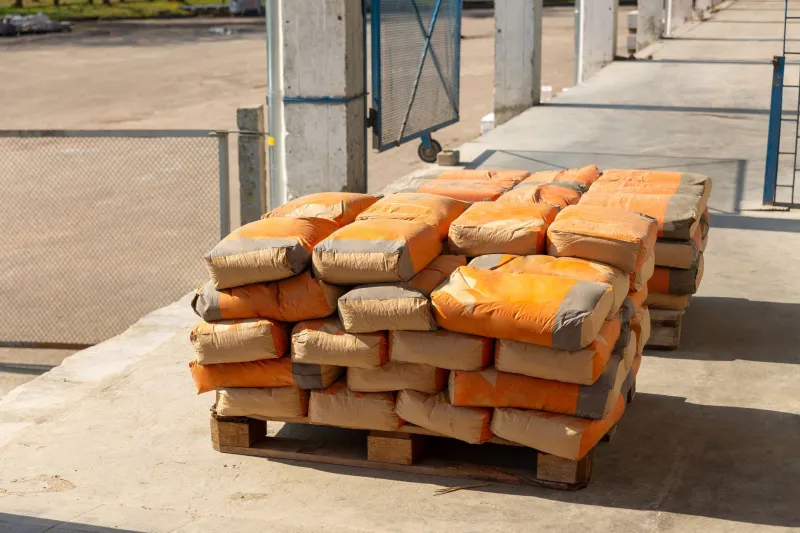
Cement-based products are not fragile, but they are greedy for moisture. Bags should sit on a pallet, under cover, with the top sheet protecting them from rain and the sides left open enough to breathe. If you wrap a pallet of cement in a sealed plastic sheet and leave it for a week, you can create a little condensation chamber. The bags on the outside may look fine while the ones in the middle start to go stiff.
Use the older bags first if you have two deliveries on site. Do not stack heavy packs against a damp wall. If a bag has gone hard, do not quietly break it into a mix and hope for the best. Flag it with the yard or the site supervisor and keep it separate. Cement is one of those materials where a small compromise early on becomes a much bigger question later.
Plasterboard: flat, dry and out of the traffic
Plasterboard wants to be stored flat on a level, dry surface, with bearers underneath and support along its length. Leaning sheets against a wall for a few hours is one thing; leaving them there for a week is how you get bowed boards and damaged edges. Once plasterboard takes on moisture, it loses strength and the paper face can start to fail. It also becomes heavier and more awkward to handle, which is its own health and safety problem.
Keep boards away from open window openings, leaking gutters and areas where boots and barrows will be scraping past. If you have to store them in a room, make sure the room is ventilated but not exposed to driving rain. Damp air is as much of an issue as a direct leak.
Timber: let it breathe, then cover the top
Timber is often treated as though it is indestructible because it arrives looking solid. In reality, it moves. It takes on moisture, dries out, cups, bows and twists. The trick is to slow that movement rather than seal it in.
Stack timber on bearers, with stickers or spacers between the layers so air can circulate. Cover the top with a sheet that overhangs the stack, weighted down against wind, but leave the sides open. Do not shrink-wrap a pack of timber and leave it in the sun or against a damp wall. That is a recipe for condensation and mould.
If you are storing treated framing timber for a few days, a simple top cover and a level base will do more than a full plastic cocoon. Keep the ends out of standing water and do not stack heavy blocks on top of a pack that is meant to stay straight.
Bricks and blocks: stable stacks, not plastic parcels
Bricks and blocks are robust, but they still need a firm, level base. A pack that leans or settles can become unsafe to open, especially if it has been sitting on soft ground. Keep cubes and packs on pallets or bearers, and do not double-stack different sizes unless you are sure the base pack can take it.
It is tempting to wrap bricks and blocks in plastic to keep the rain off. In practice, a fully sealed pack can trap moisture and encourage efflorescence or frost damage if temperatures drop. A top cover that lets the sides breathe is usually better than a full wrap. If the forecast is for hard frost, think about whether the materials really need to be on site yet, or whether they can stay in the yard until the day before use.
Insulation: dry, uncompressed and out of the way
Insulation boards and rolls are easy to store badly because they are light and easy to shove into a corner. Do not compress them under heavy materials, and do not leave them where water can pool underneath. PIR boards should be kept dry and out of prolonged sunlight, while mineral wool rolls should stay in their packaging until needed. Once insulation is wet or squashed, its performance is compromised, and that is not something you can fix by hoping the building control inspector is in a good mood.
The tarp trap
A tarpaulin is a useful tool, but it is not a magic shield. Draped over a stack and tied tight to the ground, it can trap damp air underneath and create condensation. A better approach is a top sheet with an overhang, angled so rain runs off, weighted against wind but not sealed around the sides. Check it after a windy night. A tarp that has blown loose is worse than no tarp at all because it gives a false sense of protection.
A five-minute check that saves a phone call
Before you leave site for the day, look at what is sitting outside. Is anything standing in water? Has the wind got under a cover? Are the cement bags still on a pallet? Is the plasterboard still flat? A quick walk-round is cheaper than replacing materials or explaining to the client why the job has slipped.
If something has arrived damaged or already damp, note it on the delivery paperwork and call the yard promptly. That is not making a fuss; it is how a merchant and a site work together properly. The McPhail ledger has always been about honest records, and the same principle applies on site: know what you have, know what condition it is in, and deal with it before it becomes a story.
Materials are not being difficult. They are just behaving like materials. Give them a level base, a bit of air, a sensible cover and a little attention, and they will still be fit for the job when the fixings come out of the van.