Dead Stock Before Christmas: The Quiet Cost of Pre-Winter Over-Ordering in 2026
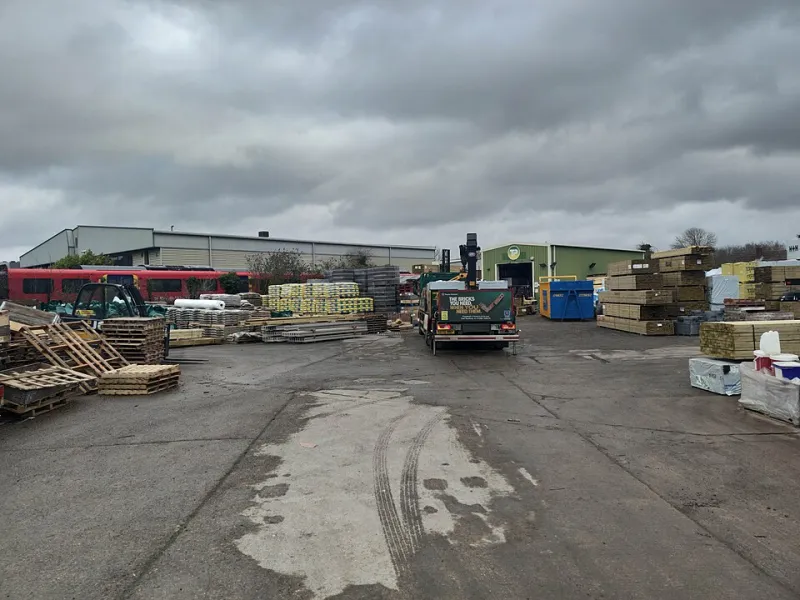
Photo: James Emmans , CC BY-SA 2.0, via Wikimedia Commons
There is a moment every autumn when a sensible order turns into a hopeful one. The job is nearly measured, the weather forecast is doing its usual thing, and someone at the counter says: 'Stick another pallet on, just in case.' It is not a silly instinct. In 2026, with lead times still uneven and cash flow tighter than anyone would like, a bit of forward planning makes sense. But there is a difference between planning and stockpiling, and the difference usually shows up in January as a soggy pallet of bricks behind the site hut.
At McPhail & Sons we have been loading vans since 1952, and we have seen plenty of 'just in case' loads come back through the yard. Not because builders are careless, but because surplus materials are quietly expensive in ways that do not appear on the invoice. This is the seasonal version of that trap, and how to sidestep it.
The pallet that keeps on charging rent
A pallet of bricks does not just cost the price of the bricks. It costs the space it takes up, the sheet of polythene you use to cover it, the trip hazard it creates, and the half-hour you spend moving it out of the way when the scaffold wagon arrives. Cement is worse: leave a few bags in the damp and they go off, and then you are paying to dispose of them as well as paying for them in the first place. Timber can warp, stain or get pinched. Bags split. Bulk bags slump. None of that is dramatic, but it nibbles at margin.
There is also the cash-flow point. Money tied up in surplus stock is money not available for wages, fuel or the next deposit. In a good year that is annoying. In a tight year it is the difference between taking a job and turning it down.
Pack sizes: the bit that catches people out
Builders' merchants do not sell everything by the single unit, and the pack size is often where a reasonable estimate turns into an unreasonable order. Bricks commonly come in packs of around 390, 400 or 500 depending on the brick and the supplier. Blocks vary. Cement is usually 25kg bags, often on pallets of 56, though not always. Timber comes in bundles and lengths. Sand and ballast are sold in 25kg bags or bulk bags that are often around 850kg or 1000kg.
The number on the quote may be per pack, per bag or per tonne. If you are not sure, ask. It sounds obvious, but a quick question at the counter is cheaper than discovering you have ordered four times what you needed because you read the line as singles.
Estimating without the guesswork
Good estimating is not about being perfect. It is about being honest. Measure the job, break it into stages, and work out what each stage actually needs. For bricks, a standard allowance is often around 5% for straightforward work and nearer 10% where there are cuts, closers or detailed pointing. For concrete, work out the volume rather than guessing by eye: length times width times depth, then convert to the right units. For mortar, think about the mix and the coverage rather than adding 'a bit extra' because it feels safer.
Online calculators are useful as a sanity check, not as a substitute for your own measurements. If the calculator says 4.2 tonnes and your gut says 6, find out why before you order. And if you are within a bag or two of a pack, ring the counter. We can often split a pack, send a part load, or tell you what is actually on the shelf.
Storage limits are real
Not every site has a dry, secure corner. Not every driveway can take a bulk bag. Not every neighbour enjoys looking at a stack of blocks for three months. Before you order big, ask where it is going to live. Cement needs to be kept dry and used reasonably soon. Timber needs to be off the ground and covered. Bricks can take weather, but they can also stain and collect rubbish. If the only storage is a tarp in a windy yard, order less and plan a second delivery.
When a quick counter call beats a panic order
The most expensive orders are often placed at 4pm on a Friday when someone has realised they are short. That is exactly when a panic order goes in for a full pallet to solve a 20-brick problem. If you are short by a small amount, call us. We can check stock, arrange a part pack, or get a small delivery out. In 2026, a two-minute call is still cheaper than a wasted pallet.
A simple pre-order checklist
- Measure twice and list materials by stage, not by vague job lot.
- Check the pack size and whether the price is per unit, per pack or per tonne.
- Work out a realistic waste allowance, not a wishful one.
- Confirm you have dry, safe storage for everything you are buying.
- Check lead times and delivery access before you commit.
- Ask about returns: unopened packs, special orders and broken bags are not always treated the same.
- If you are close to a pack size, call the counter and ask about a split or part load.
- Keep a running tally as the job progresses so you are not guessing at the end.
Ordering for the job is not being tight. It is being tidy with your cash, your site and your time. If you are planning a pre-winter load and want a second pair of eyes on the list, bring it in. We would rather talk you out of a pallet than see it sitting under a tarp in February.