The Tonne Bag Test: Sizing, Siting and Saving on Bulk Aggregates
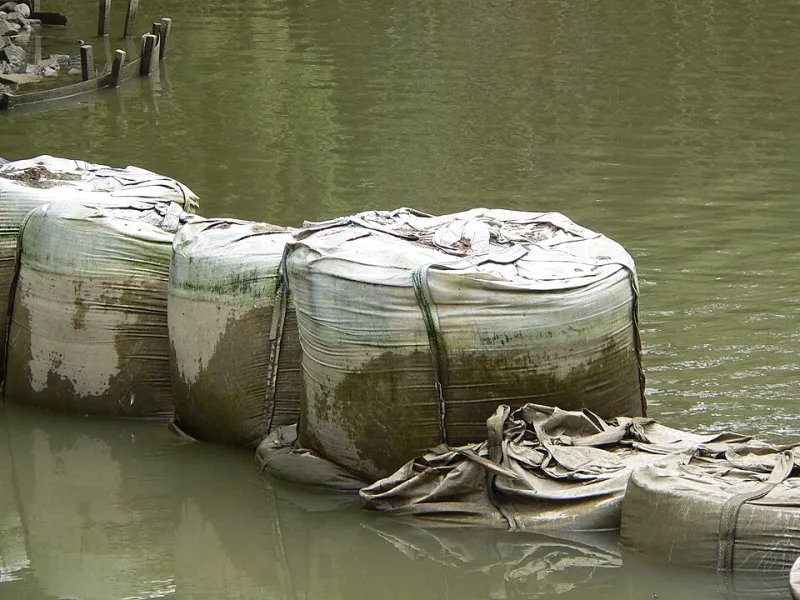
Photo: Frank C. Müller, CC BY-SA 2.5, via Wikimedia Commons
A bulk bag looks like the simple answer to a straightforward question: you need stone, sand or ballast, so you order a tonne of it in a big woven sack. In practice, most of the waste we see at McPhail & Sons starts before the shovel is even out of the van. The bag is too big, or it lands in the wrong corner of the drive, or it sits open to the weather for three weeks and turns into a soggy lump. None of that is a disaster, but it is money and time you do not get back.
This is not a lecture about buying less. It is a practical note on buying the right amount, putting it somewhere sensible, and using it properly once it is there.
Start with the finish, not the bag
Before you ring the yard, work out what the material has to do. A driveway sub-base is not the same as a concrete mix, and a bag of sharp sand for paving is not the same as a bag of building sand for mortar. The bag size follows the job, not the other way round.
Measure the area in metres, then decide the depth. For a patio, that might be 100mm of compacted sub-base. For a shed base, it could be more. Multiply length by width by depth to get cubic metres. Then remember that loose aggregate does not compact to the same volume. A 100mm layer of MOT Type 1 might need 120mm or more of loose material to finish at the right level. Allow for that before you order, not after.
Bulk bags are usually sold by weight, but the volume inside varies with the product. A tonne of ballast, a tonne of sharp sand and a tonne of lightweight decorative stone all take up different amounts of space. If you are ordering by the bag and you are not sure, ask the counter for the approximate cubic volume of that particular product. A good merchant will know, and it saves the guessing game.
If the job is small, do not automatically assume a bulk bag is cheaper. A tonne bag can be good value per kilo, but only if you use most of it. For a few wheelbarrows of gravel, loaded bags or a smaller quantity may be the smarter buy. The cheapest bag is the one you do not have half of left over.
The spot matters more than the bag
A bulk bag is heavy, and it stays where it is dropped. That makes the drop point a decision worth taking seriously.
Choose firm, level ground. A bag standing on soft grass or fresh topsoil will sink, lean and sometimes split. If the only spot is soft, put down scaffold boards or a pallet first. Keep the bag off drains, manhole covers and newly laid paving. A tonne of aggregate concentrated on one small area can do real damage to a drive, and a bag blocking a drain is a problem you do not need in November.
Think about how you will move the material. The best spot is close to the work but not in the way of the van, the skip or the back door. Leave enough room to get a wheelbarrow alongside the bag. If you have to carry every shovel-load across gravel or up a step, you will use more energy and take more time than you budgeted for.
If the delivery is coming by grab lorry or HIAB, check the reach before the wagon leaves the yard. Overhead cables, trees, parked cars and narrow lanes all matter. Tell the merchant if the lorry cannot get close. It is far better to sort that out on the phone than to watch a driver try to thread a tonne bag through a gap that looked bigger on Google Maps.
Keep it dry and keep it clean
Rain is the quiet enemy of a bulk bag. Sand and ballast left open to the weather can take in water, clump together and become harder to gauge. A soggy bag of sand is not ruined overnight, but it is not pleasant to use either.
Cover the bag with a tarpaulin and weight it down, but do not seal it so tightly that condensation cannot escape. Leave a little air. If the bag is standing on damp ground, a pallet underneath helps keep the base out of standing water. Keep different materials apart. A bag of sand next to a bag of gravel with no separation is an invitation to contamination, especially on a windy site.
When you open the bag, cut the top rather than slashing the side. Fold the top over between uses. A neat bag stays usable; a torn bag spills its contents into the mud and becomes a trip hazard. If you are decanting into a wheelbarrow, keep the shovel and barrow clean. A bit of old mortar or soil in the barrow does not matter for a sub-base, but it does matter for a finish mix.
Use it in the right order
If you have more than one bag, use the one that has been open longest first. Keep a note of what is in each bag if the labels fade. Do not mix part-bags of different materials just to tidy up. It is tempting to tip the last of the sand into the last of the ballast, but unless you know exactly what you are doing, you are making a new material with no specification.
For concrete and mortar, measure properly. A bulk bag makes it easy to be casual, and casual measuring is how mixes end up too strong, too weak or too wet. Use a consistent gauge, whether that is a bucket, a barrow or a proper measure. The bag is a store, not a recipe.
The empty bag is part of the job
Once the bag is empty, do not leave it lying about. Bulk bags are not usually collected with household recycling, and they should not go in a skip unless the skip company accepts them. Many councils take them at household waste recycling centres, and some merchants will take empties back for recycling if they have a baler. Ask at the yard when you order. If you cannot return it, fold it flat, tie it and take it to the tip properly. Burning it is not a good idea, and fly-tipping it is worse.
A bulk bag is a practical way to buy aggregate, but it rewards a bit of thought. Measure the job, ask about volume, choose a firm and sensible spot, cover it, and use it in order. Do that, and the bag is a saving. Skip those steps, and it is just a heavy problem in a sack.
McPhail & Sons have been loading bags and answering these questions since 1952, and the same small mistakes still turn up at the counter. A quick conversation before delivery is usually cheaper than a second order after it.