The Approach Matters: Access Questions to Settle Before the Wagon Leaves the Yard

Photo: HIAB lorry delivering building materials to UK house narrow driveway access, via deadline.com
A delivery address is a point on a map. A delivery is a physical event. Between the two sits the last hundred metres — the turn into the street, the parked car opposite the gate, the gatepost that looked wider on the phone, the soft patch of gravel that swallows a pallet truck. Most failed deliveries aren't caused by the wrong bricks or the wrong day. They're caused by the approach.
At McPhail & Sons we've been loading wagons since 1952, and we've learned that a few minutes spent on access at the order desk saves a great deal of grief later. Here's what we ask, and why.
The wagon is bigger than the memory of it
People remember the last van that came. Vans are nimble. A six-wheeled flatbed with a hiab is not. Neither is an eight-wheeler, a 7.5-tonner with a tail lift, or a pallet lorry with a rear steer. Each has a length, a width, a height and a turning circle that might not match the lane outside your house.
So the first question is simple: what kind of vehicle has actually got to your gate before? If the answer is "a transit van, just about", that's useful. If it's "nothing bigger than a wheelbarrow since the bins changed", that's useful too. We can send a smaller wagon, split the load, or arrange collection. What we can't do is shrink the lorry at the kerb.
The gate is not the same as the gap
"It'll fit" is a hopeful phrase. We prefer measurements. The gap between the gateposts is not the same as the width of the driveway, and the width of the driveway is not the same as the space between the wall and the neighbour's hedge. Hinges, planters, bins, a water butt, a parked bike — all of it counts.
Then there's height. Archways, low branches, cables, a carport, a height barrier on a private road. And the threshold: a kerb, a lip, a slope, a gravel strip. A pallet might go through the gap, but can a pallet truck roll over the surface? If not, the load stops at the kerb, and that needs to be agreed in advance rather than discovered by the driver.
Where the load can actually land
"On site" is not a set-down point. "In the drive" is closer, but still vague. The useful answer is specific: behind the gate on the left, on the hardstanding by the garage, on the road side of the wall but not across the pavement. We need a spot that is solid, level, out of the way and doesn't block a neighbour, a drain, a fire exit or the pavement.
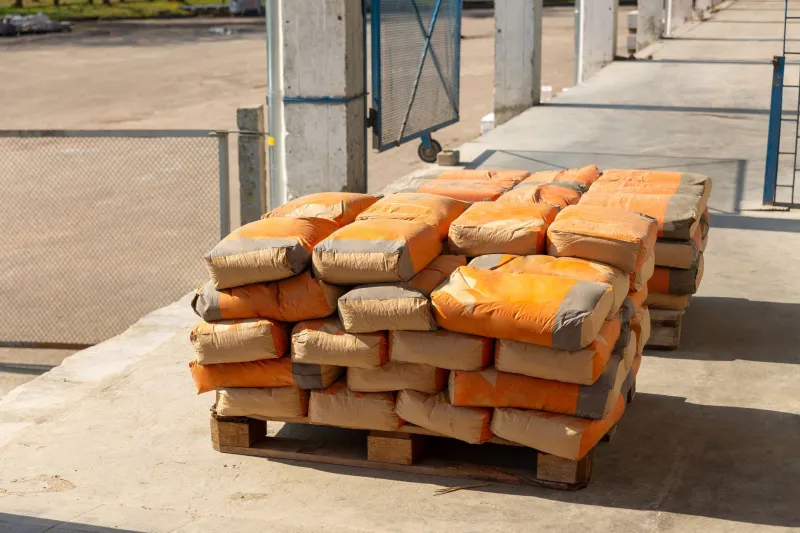
It also helps to be honest about handling. A merchant driver will tail-lift or hiab the load to an agreed point. He isn't there to carry it through the house or up a garden path. If the materials need moving further, that's a separate conversation — and usually a separate pair of hands.
The street outside counts too
Even a perfect driveway can be undone by the road. Terraced streets with cars on both sides. A narrow lane with passing places. Double yellow lines. A bus stop. A school run at half past three. A market day, a bin day, a weekend football crowd.
Some roads need a permit or a parking suspension for a wagon to stop. Some don't, but the driver will still need a gap. If you know the street is awkward, say so. We can time the delivery, use a smaller vehicle, or meet the wagon at a nearby drop point. What we can't do is park on double yellows and hope.
Surfaces, slopes and the British weather
A dry lawn in July is not the same as a wet lawn in November. Gravel, cobbles, block paving, a steep drive, a soft verge — all of these affect whether a loaded wagon can get in and out without sinking or sliding. If the ground is doubtful, send a photo. A picture of the gate and the approach tells us more than a paragraph of description.
Winter adds ice, low sun and early darkness. If the delivery is going somewhere exposed, we'd rather know before the wagon is loaded.
The three-minute access check
Before you place the order, run through this with us:
- What's the largest vehicle that has reached the property before?
- Are there width or height restrictions at the gate, lane or entrance?
- Where exactly should the load be set down?
- Are there parked cars, permits, yellow lines or timed restrictions on the street?
- What's the surface like between the kerb and the set-down point?
- Is there anything unusual — a school, a market, a bridge, a narrow bend?
Photos help. A wide shot of the street, a close-up of the gate, a picture of the drive. We're not asking for a survey. We're asking for the same information the driver would want if he could ring you from the cab.
If it's tight, say so
We'd much rather have an awkward conversation at the order desk than a driver stuck halfway down a lane with a block load and no way to turn. Tight access isn't a problem. Surprise access is. Tell us, and we'll work around it — a smaller wagon, a split load, a timed drop, a kerbside set-down, or collection from the yard if that suits you better.
The address gets us to the street. The access gets us to your gate. Five minutes now is cheaper than a wasted morning, a blocked road or a load left in the wrong place.