C16, C24 and the Rest: Picking Timber Without the Sales Pitch
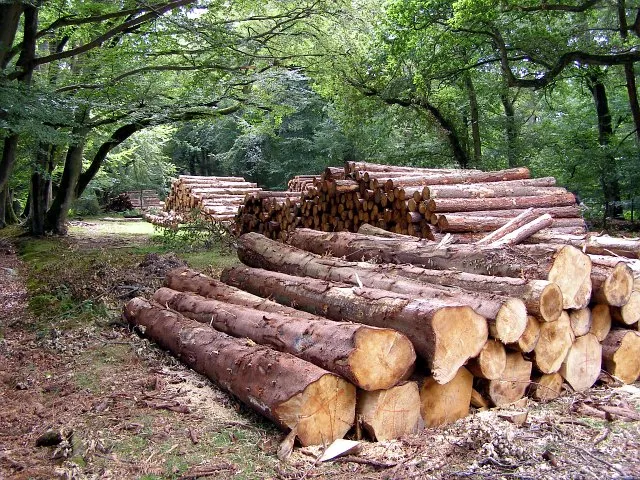
Photo: Jim Champion, CC BY-SA 2.0, via Wikimedia Commons
Walk into any timber yard and you will hear the same shorthand: C16 for studs, C24 for joists, CLS for partitions, treated for anything outdoors. Most of the time that shorthand works. The trouble starts when it becomes a habit rather than a decision. In 2026, with timber prices still prone to the odd lurch, it is worth knowing which grade you actually need and which one you are buying because it sounds safer.
Start with the job, not the label
Timber grades are a language for strength and stiffness. They are not a ranking of how good the timber looks, how straight it is, or how well it will wear. A clean-looking length of C16 can be perfectly sound for a stud wall. A scruffier-looking C24 might be doing the heavy lifting over a wider span. The label matters because it tells you what the piece has been assessed to do, not because it makes the timber somehow more premium.
The first question at the counter should always be: what is it doing? A partition stud, a floor joist, a deck board and a roof batten are four different jobs. They need four different conversations.
C16 and C24: what the numbers really mean
C16 and C24 are strength classes for softwood. In simple terms, C24 is stronger and stiffer than C16. That means it can often span further or carry more for the same size, which is why it turns up in floor joists, roof structures and other places where the span tables are doing the talking.
But C24 is not automatically the right choice for every bit of framing. A lot of internal studwork is perfectly well served by C16. If you are building a non-load-bearing partition, the extra strength of C24 is not doing much for you except adding cost. On the other hand, if you are stretching a joist span or working to a designer's specification, dropping from C24 to C16 because it is cheaper on the day is exactly the kind of false economy that comes back to bite.
The practical answer is boring but reliable: check the span, check the load, check the specification. If a structural drawing or building control note says C24, buy C24. If you are pricing a simple internal job, do not assume the heavier grade is earning its keep.
CLS is a shape, not a grade
CLS gets used as if it were a grade, but it is really a dimensional standard: Canadian Lumber Standard, planed square edge, usually in common stud sizes. It is popular because it is straight, consistent and easy to work with. A lot of CLS is stress graded, often as C16, but the letters CLS on their own do not tell you the strength class.
That matters when someone asks for CLS for a load-bearing wall. The right reply is not simply 'yes, we have CLS'. It is 'what grade is it, and what is the job?' For studwork, CLS is a sensible everyday choice. For anything structural, the grade and the specification still need to be checked.
Treated timber: read the label, not the colour
Treatment is another area where a little knowledge saves a lot of money. Treated timber is not one product. The treatment class should match the exposure. Above-ground uses are one thing; ground contact, decking joists and posts are another. A green tint is not a guarantee that the piece is suitable for burial or constant damp.
For decking, fencing and outdoor joinery, ask what the timber has been treated for and where it is going. Deck boards and joists do different jobs in the same deck. A joist close to the ground needs more protection than a handrail. If you are buying treated timber for a repair, match the treatment to the damp risk rather than grabbing whatever is nearest the door.
Where buyers overspend
The most common overspend is C24 everywhere. It feels like the safe option, and on a small job the difference may not look like much. Across a full house or a run of partitions, it adds up. If the timber is not being asked to carry a structural load, you are often paying for strength you will never use.
Another is over-specified finish. Planed all round looks lovely, but if the timber is going inside a stud wall, nobody will see it. Sawn or regularised stock will do the job. The same goes for treated timber in a dry internal application: if it is not exposed to moisture, you may be buying protection that is not needed.
Where buyers under-spec
The opposite mistake is more expensive. Untreated timber in a damp location, C16 where the span table calls for C24, or ordinary deck boards used as joists are all shortcuts that tend to show up later as sagging, movement or rot. If a job is exposed to weather, ground contact or regular wetting, the treatment and grade need to be right, not merely close enough.
It is also worth watching moisture content. Timber that has been stored badly or moved straight from a cold yard into a warm building can move after it is fixed. For joinery and visible work, ask how the stock has been kept. For framing, allow for normal movement and do not fight it.
A merchant's checklist before you load the van
Before you buy, be clear on five things: the job, the span or load, the exposure, the finish you actually need, and whether the timber will be seen. If you can answer those, the grade usually chooses itself. If you cannot, ask. A good timber yard would rather have that conversation at the counter than see you back with a problem.
At McPhail & Sons we have been selling timber long enough to know that the best spec is the one that fits the job. That has been true since 1952, and it is still true in 2026. Buy for the work in front of you, not for the label that sounds most impressive.