Spare Parts and Second Chances: The Fix-It Shift on UK Jobs
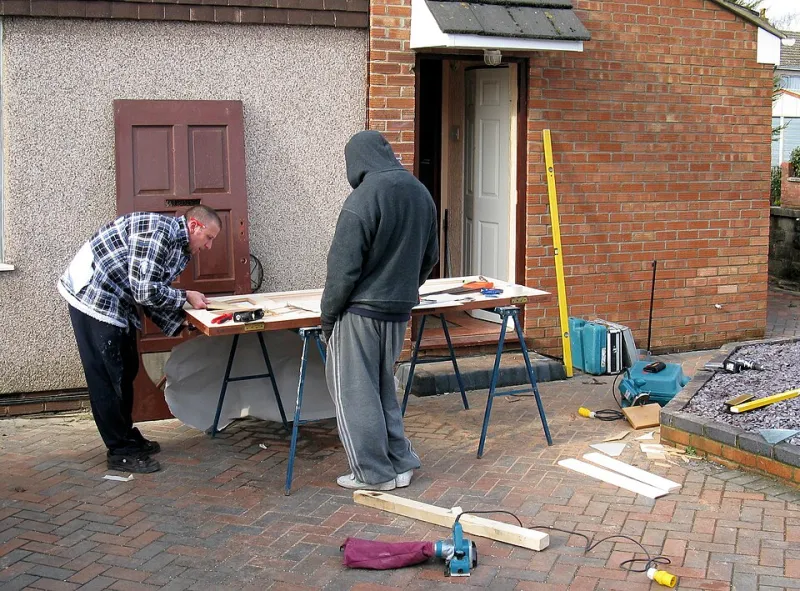
Photo: Adrian Pingstone (Arpingstone), Public domain, via Wikimedia Commons
For years the default on plenty of jobs was straightforward: rip it out and start again. A misted window unit, a sticking door, a tired sash window or a leaky roof flashing often led straight to a replacement quote. In 2026, that default is loosening. Homeowners are asking more questions about repair, and trades are finding that a good repair job can be more interesting, more local and more repeatable than a straight replacement.
Why the replace-first habit is loosening
Some of it is cost. A full window or door replacement is a big number, and homeowners are weighing it against a repair that keeps the original character of the house. Some of it is the age of the housing stock. The UK has a lot of older properties where the original joinery, stonework and roof details are worth keeping. Ripping out a sound sash window to fit a new unit can feel like throwing away the very thing that made the house worth buying.
There is also a practical streak at work. Lead times on some replacement products can still be awkward. A repair that gets a window working again or a roof watertight can be the faster route. And for many customers, the environmental argument is now part of the conversation: keeping existing materials in use generally makes more sense than binning them and starting over.
What homeowners are actually asking for
The requests are often small and specific. Can the sash window be re-corded rather than replaced? Can the rotten section at the bottom of the frame be spliced in? Can the door be adjusted rather than swapped? Can the roof leak be fixed at the flashing? Can the sealed unit be replaced without changing the whole window?
Those questions put a premium on diagnosis. A repair-first job often starts with finding out what has actually failed. Is the timber rotten through, or is it a surface problem? Is the door sticking because of swollen timber, a dropped hinge or a worn lock? Is the leak coming from the flashing, the tiles or a blocked gutter? The answer changes the repair, the price and the advice you give.
The merchant angle: small parts, big difference
For a builders' merchant, the repair-first shift shows up on the shelf. The big-ticket replacement items still matter, but so do the small parts that make a repair possible: hinges, locks, handles, glazing beads, putty, sash cord, weather seals, flashing tape, mortar dyes, repair resins, timber offcuts and matching mouldings.
That can be frustrating for a merchant who likes neat product lines, because repair work is untidy. One job needs a particular hinge. Another needs a length of moulding that matches a profile from decades ago. A third needs a small quantity of treated timber for a splice. The stock is varied and the quantities are small, but the customers are loyal when they know you can help.
It also means the counter conversation matters. If a customer walks in with a broken window fitting and no idea what it is called, a merchant who can identify it is worth their weight. McPhail & Sons has been doing that kind of thing since 1952. Older properties are not a niche to us; they are the everyday stock in trade.
Where repair stops making sense
Repair-first does not mean repair at any cost. There are times when replacement is the honest answer. Timber that is rotten well beyond a splice, a frame that has lost its shape, a roof structure with widespread decay or a window where the repair bill approaches the cost of a well-specified replacement all need a straight conversation.
The trick is not to sell repair as a moral position. It is to give the customer the facts: what has failed, what a repair will achieve, how long it is likely to last and what the alternative costs. Sometimes the repair is the obvious winner. Sometimes it is a holding measure. Sometimes replacement is the better use of money. A good trade will say so.
Pricing and paperwork for repair work
Repair jobs are often fiddly, and that needs to be reflected in the quote. A simple hinge replacement can take longer than it looks. Cutting out rot and splicing in new timber takes care. Re-cording a sash window is not a five-minute job. Pricing only the materials and a token labour rate is a quick way to resent the work.
It also helps to be clear on paper about what is being reused and what is being replaced. If a window is being repaired rather than replaced, note the condition of the parts that are staying. That protects both sides if something fails later. For older buildings, a short written note about the repair and the expected lifespan is worth more than a vague verbal assurance.
What we are keeping on the shelf in 2026
The repair-first trend does not need a fancy strategy. It needs practical stock and practical advice. Keep the common repair parts, know the old profiles and treatments that suit older properties, and be willing to spend five minutes helping someone identify a fitting they have brought in in a plastic bag.
For trades, the opportunity is to be the person who can make the old thing work again. For merchants, it is to be the place where that person can find the bits. That is not a step back from modern building. It is simply recognising that a lot of UK housing stock still has plenty of life left in it, and that keeping it serviceable is a perfectly good way to spend a working day.