What Comes Back on the Wagon: Making Sense of Pallets, Packaging and Delivery Leftovers
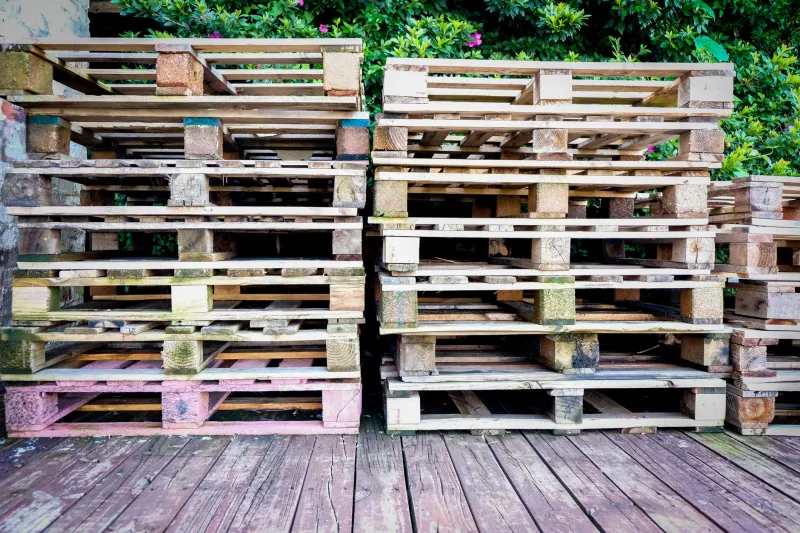
There's a moment most site managers know well. The wagon pulls out, the gate swings shut, and you're left standing in front of a stack of timber pallets that wasn't there this morning. Somewhere behind you is a bundle of shrink wrap, a couple of empty banding straps, and a lingering feeling that you should probably do something about all of it before the health and safety visit.
It's a small thing, pallets. Until you've got forty of them against the fence and the yard's lost a corner. So let's talk about it properly — what these things actually are, who owns them, and what happens next.
The pallet isn't free — it's just not on your invoice yet
Here's the bit that catches people out. A good proportion of the pallets arriving on a merchant wagon belong to a pooling scheme — the blue ones especially, and the standard Euro pallets you'll see stacked at the back of any builders' yard in the country. They're not ours to give away and they're not yours to keep. They're circulating stock, worth somewhere in the region of a tenner each depending on the scheme, and the merchant you bought from is accountable for them.
That's why some suppliers charge a deposit and others simply expect a swap. If you've paid a deposit, the pallet is effectively yours until you bring it back — and you get the money when you do. If you haven't paid one, the pallet is borrowed and it wants to go home.
None of this is a trick. It's just bookkeeping that only works if both ends of the transaction play along.
What we can take, and what we politely can't
At McPhail & Sons we're happy to take back sound pallets from our own deliveries — that's been the arrangement since the yard opened in 1952 and it hasn't changed much. Bring them back on the next run, or stack them where the driver can reach them, and nine times out of ten they'll go straight back on the wagon.
What we can't do is take absolutely anything.
- Broken pallets. A snapped bearer or a missing deck board makes it useless for the next load and a liability for whoever handles it. Those go to repair or to the chipper, not back into the stack.
- Pallets from other merchants' schemes. If it's a blue pallet from a firm we don't pool with, we can't credit it. Take it back to where it came from, or ask at the counter and we'll point you to someone who can.
- Contaminated timber. Anything that's been sitting in oil, paint or damp for six months is firewood at best.
- Packaging in general. Shrink wrap, banding and cardboard aren't part of a pallet return. Some of it we can recycle on site; most of it is your waste to manage.
One practical tip: ring ahead if you're bringing back a van-load. It saves you a wasted trip and it saves the yard a headache.
Storing them properly between deliveries
A pallet left flat on wet ground will soak up water like a sponge. It'll also become a home for anything small and scuttling, and it'll warp enough that nobody will want it back.
Keep returns stacked flat, level and off the deck — a couple of bearers underneath is plenty. Somewhere covered is ideal but a corner out of the prevailing wind will do. Don't lean them against a wall for weeks on end; that's how you get a banana-shaped pallet and a disappointed driver.
If you're on a tight urban site, agree a collection day at the point of order rather than hoping it'll sort itself out. We'd rather plan a wagon round than have forty pallets blocking your fire exit.
Reuse is fine — up to a point
Plenty of our customers repurpose pallets and we've no objection to it, so long as it's a pallet you've paid a deposit on. Broken down, they make decent site trestles, temporary walkways over soft ground, firewood racks and — with a bit of effort — the garden compost heap everyone's been promising themselves.
Be sensible about it, though. Pallets that have carried cement bags or treated timber aren't the thing to be burning in the living room stove, and surface contamination is a real concern on food-growing beds. If it's a pooling pallet, don't cut it up — that turns a returnable asset into a skip filler.
A little planning saves a lot of shuffling
Most pallet clutter is decided before the wagon ever arrives, not after. A few habits worth adopting:
- Ask for a pallet count on the quote. It sounds fussy; it isn't. If you know twelve pallets are landing, you can find space for twelve.
- Match the order to the job. Part-loads and half-pallets save a lot of timber going to waste. If you're only rendering a gable end, you don't need a full pallet of board.
- Say yes to a return run. If the driver offers to take empties back on the next drop, take them up on it.
- Nominate one person to own the stack. Every yard has someone who notices these things. Let them be the one who notices.
The small print that isn't small
A tidy yard isn't about appearances. It's about a delivery that can actually reach the back of the site, a fire exit that stays clear, and a waste bill that doesn't quietly grow every month because nobody counted the packaging.
If you're unsure whether a pallet is returnable, or what your deposit was, give the counter a ring. Bring the delivery note if you've got it. We'll tell you straight — the same way we have for the last seventy-odd years.